您的瀏覽器不支援JavaScript功能,若網頁功能無法正常使用時,請開啟瀏覽器JavaScript狀態

AKTC The Air Mattress Expert 唐德工業股份有限公司
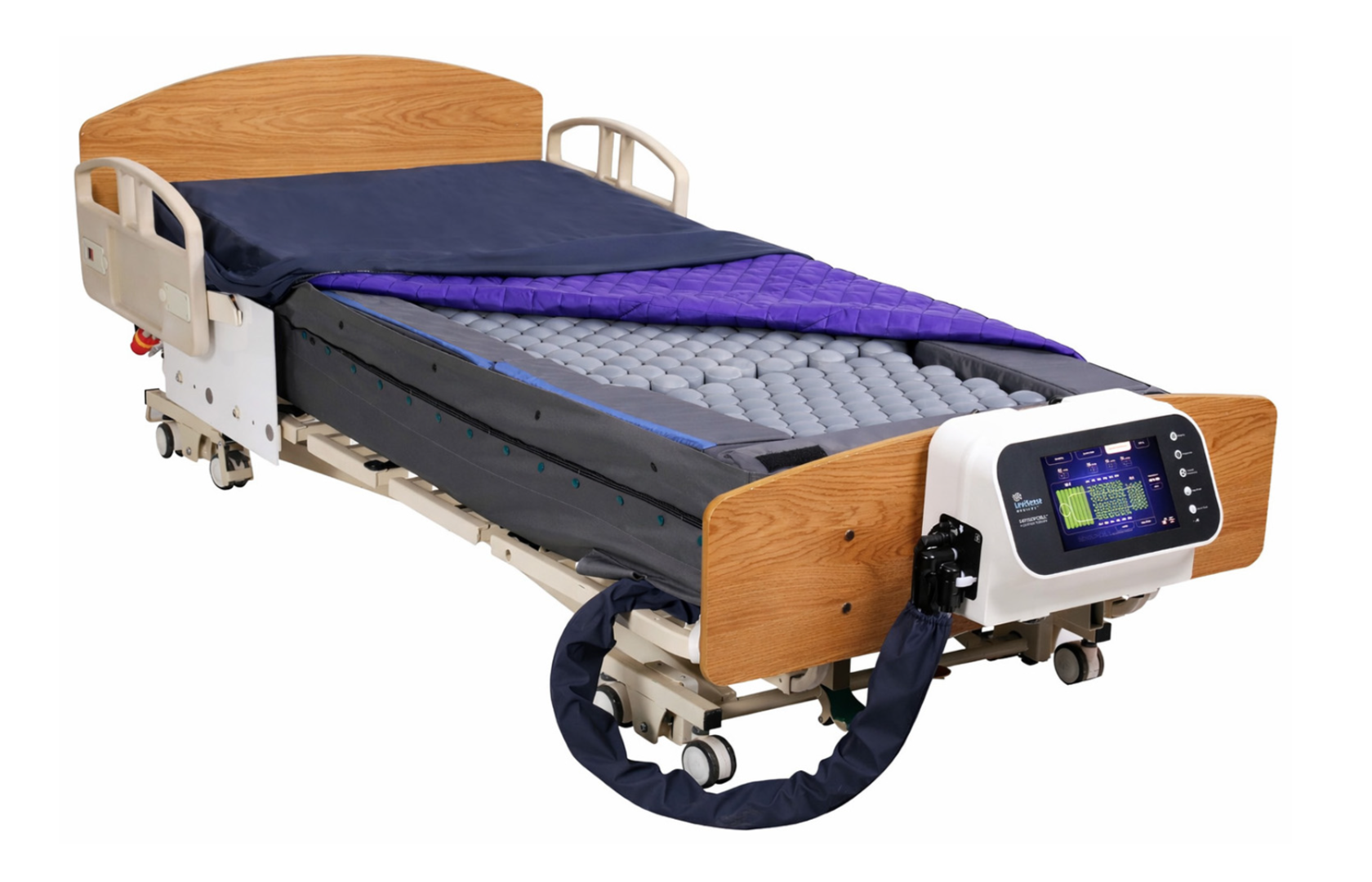
Pro-Daptive™ SensorCell™

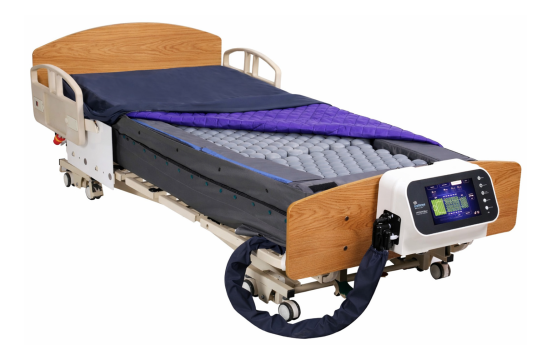
The Pro-Daptive™ SensorCell™ Flotation Surface is a powered therapeutic mattress that provides a new generation of therapeutic flotation. LeviSense combines SensorCell technology with surface visualization and control to achieve what traditional surfaces can’t: programmable immersion and outstanding envelopment for unmatched pressure redistribution, with meaningful labor and cost savings across the continuum of care.

Catalogues
The problem

Pressure injuries remain a persistent and costly problem.

Prevention has not become meaningfully easier, and treatment still requires arduous, around-the-clock care. The technology beneath the patient has changed very little over the past decades: conventional surfaces redistribute pressure across large sections of the body, but cannot respond with precision to small bony prominences, wounds, or changing clinical needs.

Caregivers are left to compensate — repeatedly repositioning patients, floating heels, off-loading wounds and adapting the surface by hand. The burden falls hardest on the 400,000 Americans living with spinal cord injury, where recurrence runs as high as 80%, and the 5.5 million who are bed-bound.

DECADES-OLDsurface technology
AROUND-THE-CLOCKcaregiver intervention
PERSISTENTpressure injuries
2.5 millionAmericans affected by pressure injuries
61,000pressure injury-related deaths annually
$26.8 billionannual cost to healthcare providers
U.S. figures, per LeviSense Medical. Cost estimate originates with Padula & Delarmente (2019), as reported by the National Pressure Injury Advisory Panel.
The Pro-Daptive™ solution

The next generation of flotation for pressure injury treatment and prevention.

Developed in collaboration with wound care specialists and validated through laboratory testing, Pro-Daptive™ is built to promote and accelerate healing of advanced pressure injuries, including Stage III, Stage IV, unstageable, post-flap and post-graft, in hospitals, acute care, long-term care and home care settings.

  • 20× the surface detail. More than 20 SensorCell™s sit in the area of a single alternating-pressure air bladder, so therapy is delivered in an area 1/20th the size.
  • Better envelopment. Hundreds of independent cells conform to the smallest contours of the body.
  • Deeper immersion. Up to 5.8″ (14.7 cm) deep, cradling up to 40% more surface area than most low-air-loss surfaces.
  • Precise control. 12 to 50 mmHg in 2 mmHg steps for comfort and healing, ≤ 5 mmHg to float heels or off-load a wound, and a firm 70 mmHg reserved for transfers and CPR.

For the treatment and prevention of decubitus ulcers

Pressure injuries or bed sores.

TREATMENT

  • Stage III, Stage IV and unstageable pressure injuries
  • Post-flap and post-graft
  • High acuity patients with severe wounds

PREVENTION

For those at high risk of developing pressure injuries, such as patients who are bed-bound or have mobility limitations due to:

  • Spinal Cord Injury, MS, ALS, CP
  • Post-stroke, amputation, and other mobility limitations
  • Rehabilitation from disease or injury
PATENTED SENSORCELL™ TECHNOLOGY

High-resolution support that responds to the patient.

Superior immersion and envelopment, in a simplified, accessible platform.

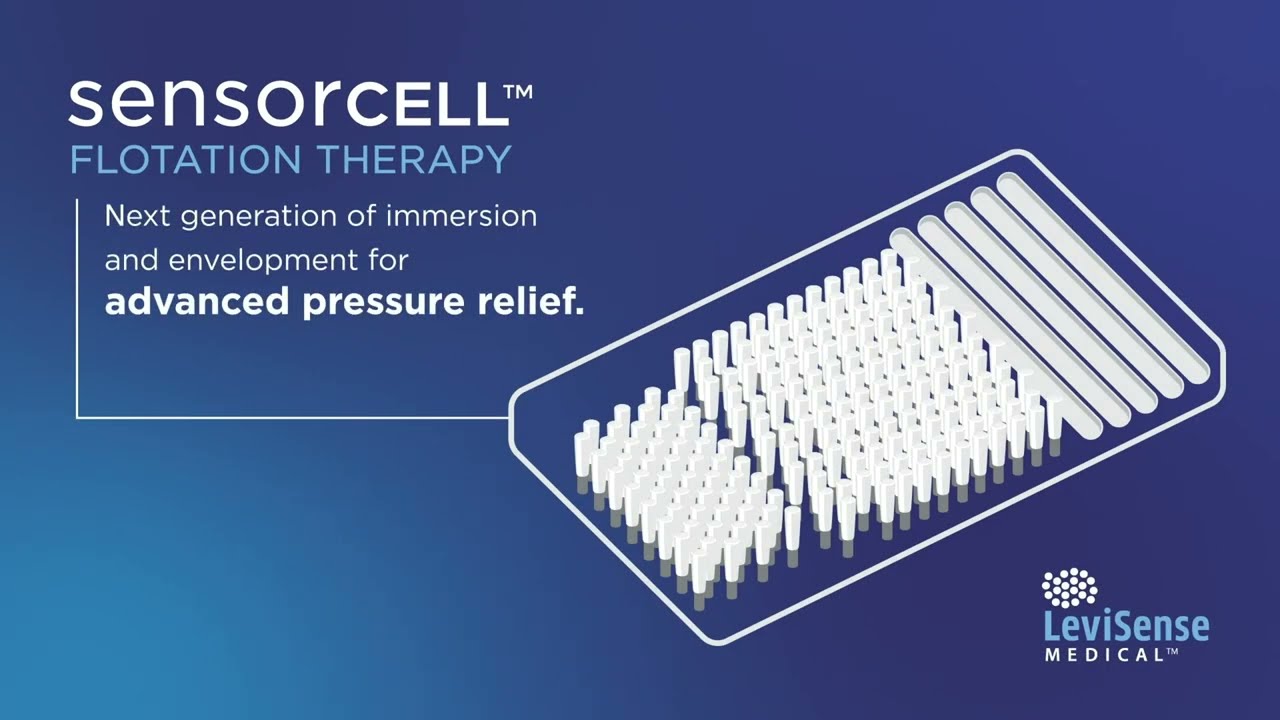
More than 200 small-diameter SensorCell™s. Each SensorCell™ moves independently—rising or yielding—in response to the patient’s weight and contours. Each cell adjusts to provide support or relief where it is needed—even around small bony prominences—creating exceptional immersion and envelopment while minimizing areas of concentrated pressure.


200+
independently responsive SensorCell™s
2.5″
diameter of each SensorCell™ (6.4 cm)
26mmHg
default programmed pressure
5.8″
extraordinary immersion depth (14.7 cm)
SENSORCELL™ ARRAY — RESPONSE DETAIL
HEEL FLOAT WITH THE SENSORCELL™

Protect the most vulnerable areas

A special function – Heel Float – allows the caregiver to protect the most vulnerable areas by creating a void and completely off-loading the heels.
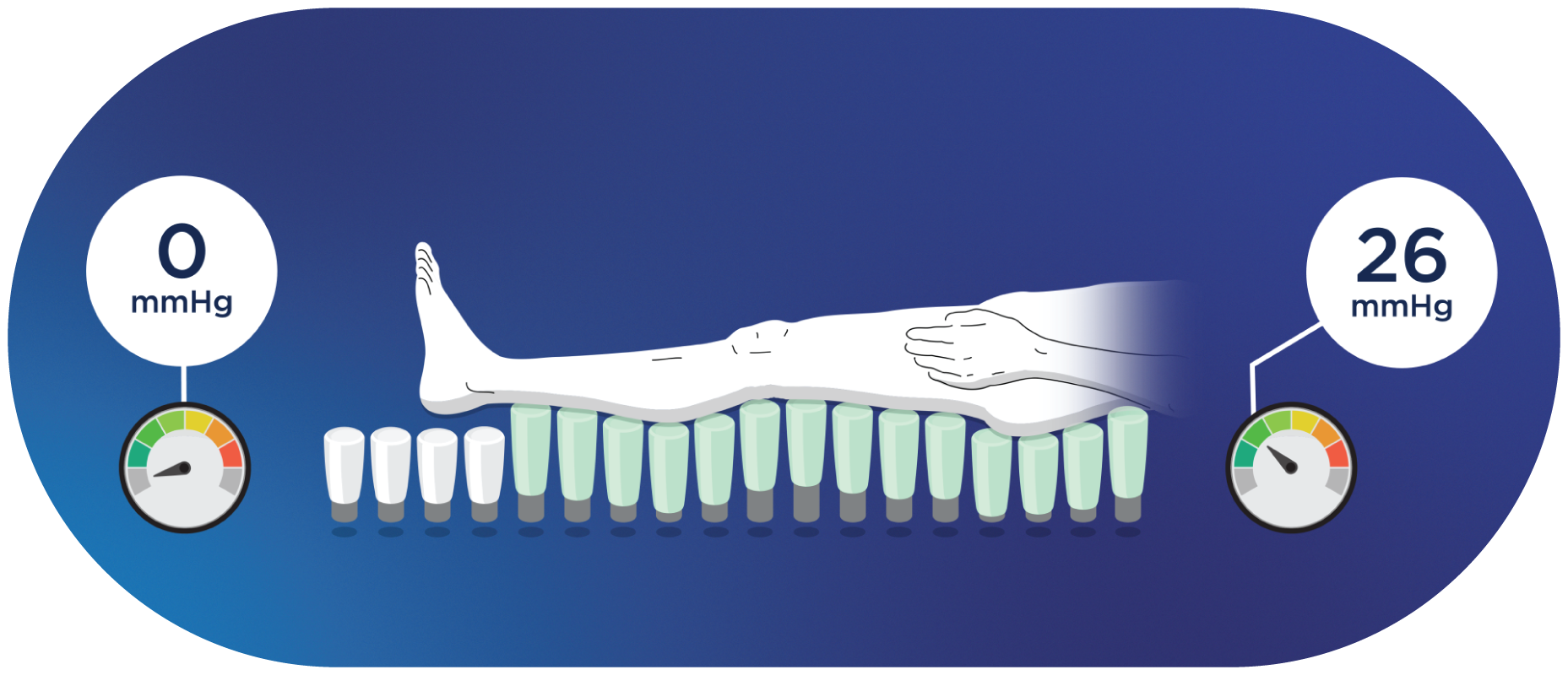
≤ 5 mmHgCells under the heel stop pushing back, leaving the heel suspended in a void.
26 mmHgThe rest of the surface holds its therapeutic setting.
No bootsThe surface floats the heels itself, with no boots or pillows under the leg.
Side view of a leg on the SensorCell surface — heel cells at ≤ 5 mmHg, body cells at 26 mmHg

See the surface in motion

A two-minute walkthrough of SensorCell™ flotation, mode switching and off-loading.
  • SensorCell™ flotationHow independent cells rise and yield under the body.
  • Mode switchingMoving between modes from the touchscreen monitor.
  • Off-loadingHeel flotation and cavity creation at ≤ 5 mmHg.

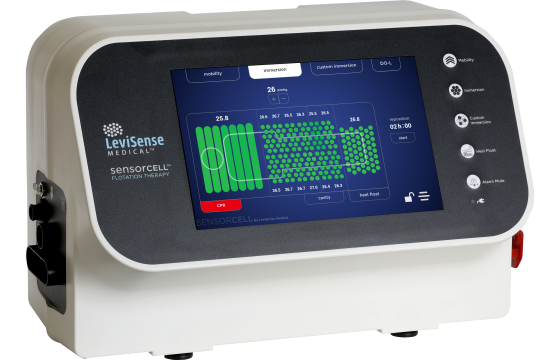
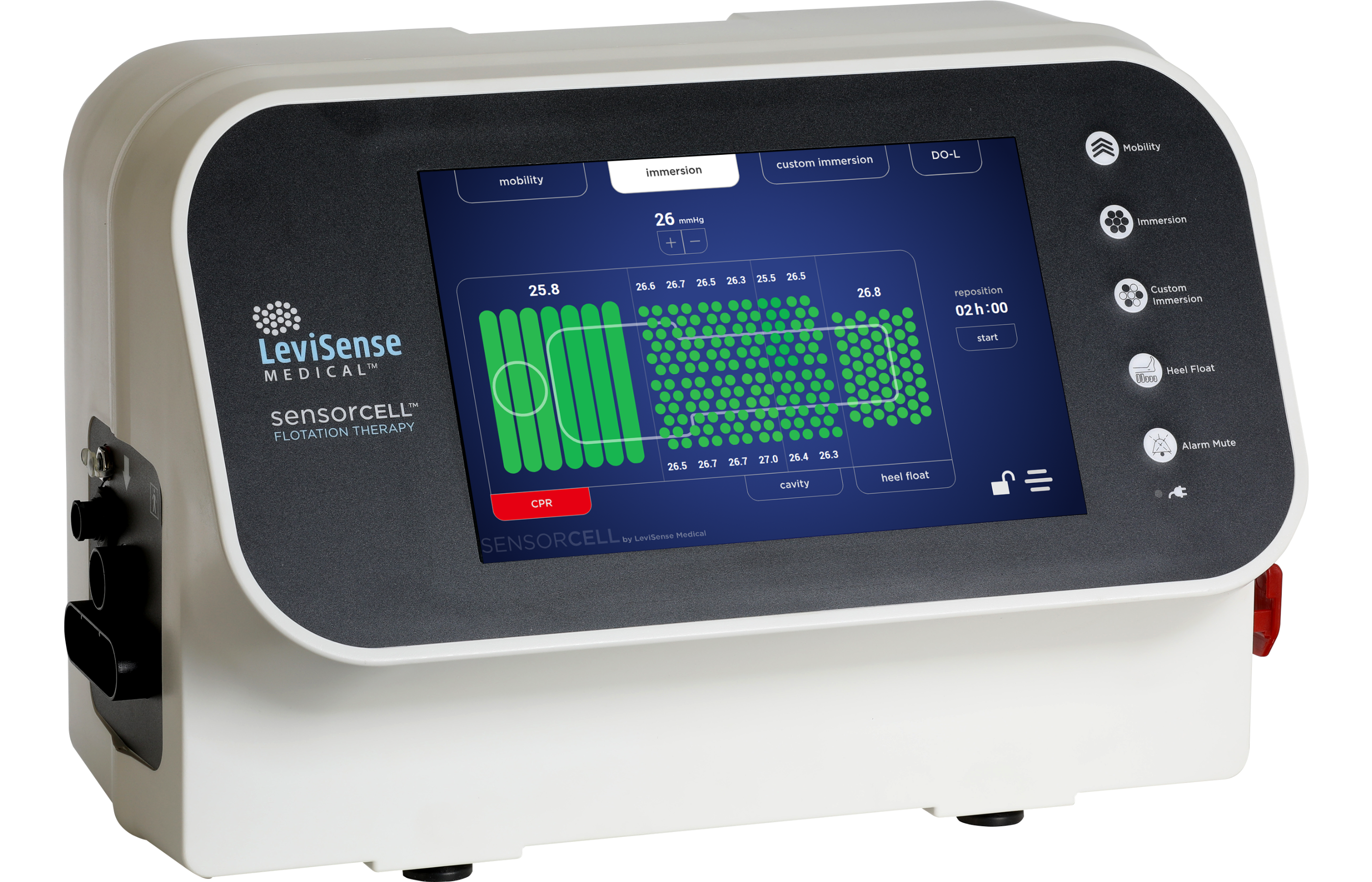
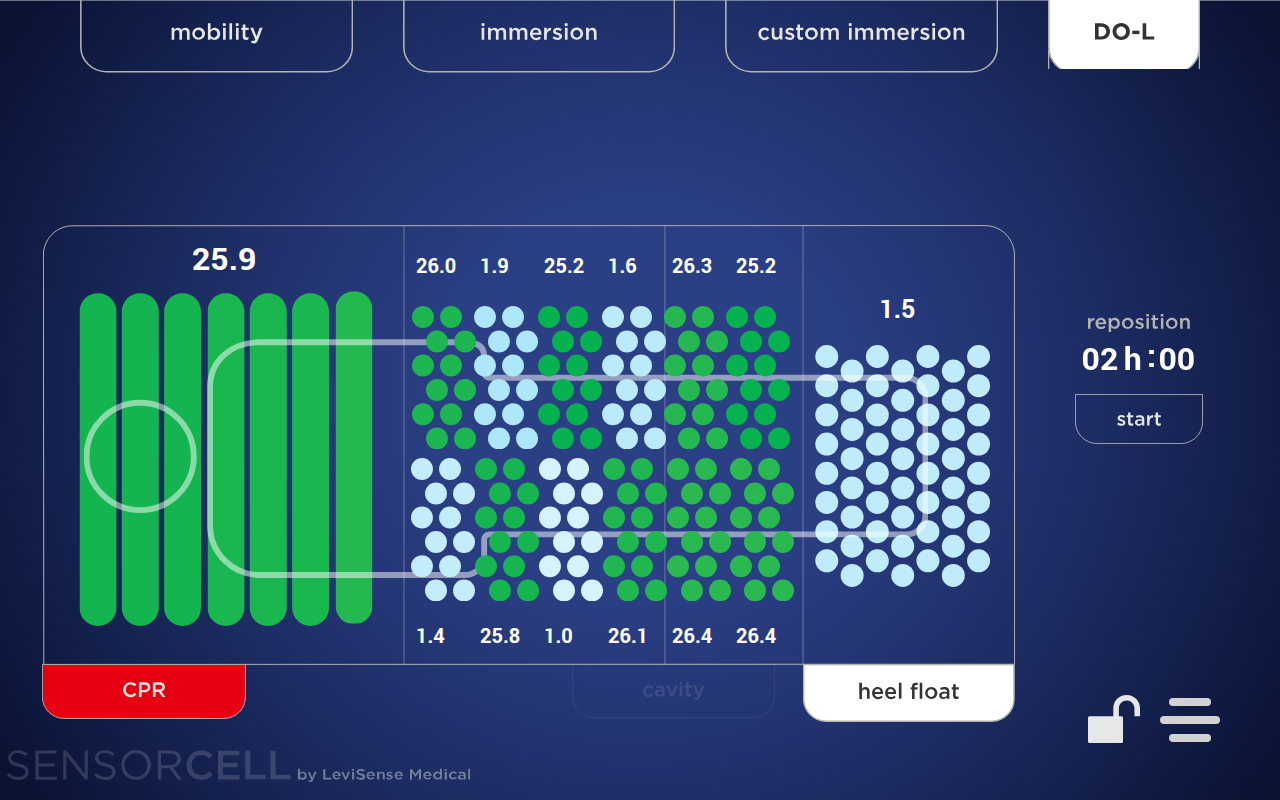
The SensorCell™ Surface Monitor

Flotation control, adjustments and caregiver settings on one screen.
The SensorCell Surface Monitor showing the 14 zones, with the heel zone floated and a cavity created inside a 26 mmHg surface

FLOTATION CONTROL

  • Pelvis, legs and foot section Hundreds of independent SensorCell™s, 2.5-inch (6.4 cm) diameter, each reacting independently to control pressure.
  • Torso section Quality high volume air cells with adjustable support and pressure redistribution.

ADJUSTMENTS

  • Pressure range Adjustable from 12 to 50 mmHg for therapy; 70 mmHg for Mobility and CPR.
  • Zones 14 independently adjustable zones.
  • Memory Featuring memorized adjustments.
  • Repositioning Countdown timer.

CAREGIVER SETTINGS

  • Navigation Navigates to all five primary modes. One touch initiates an immediate response and a rapid transition between modes.
  • Monitoring The screen shows the user-selected pressure settings and monitors the actual pressure in each of the 14 zones.
  • CPR Two alternatives for quick access.

What the pressure range means in practice

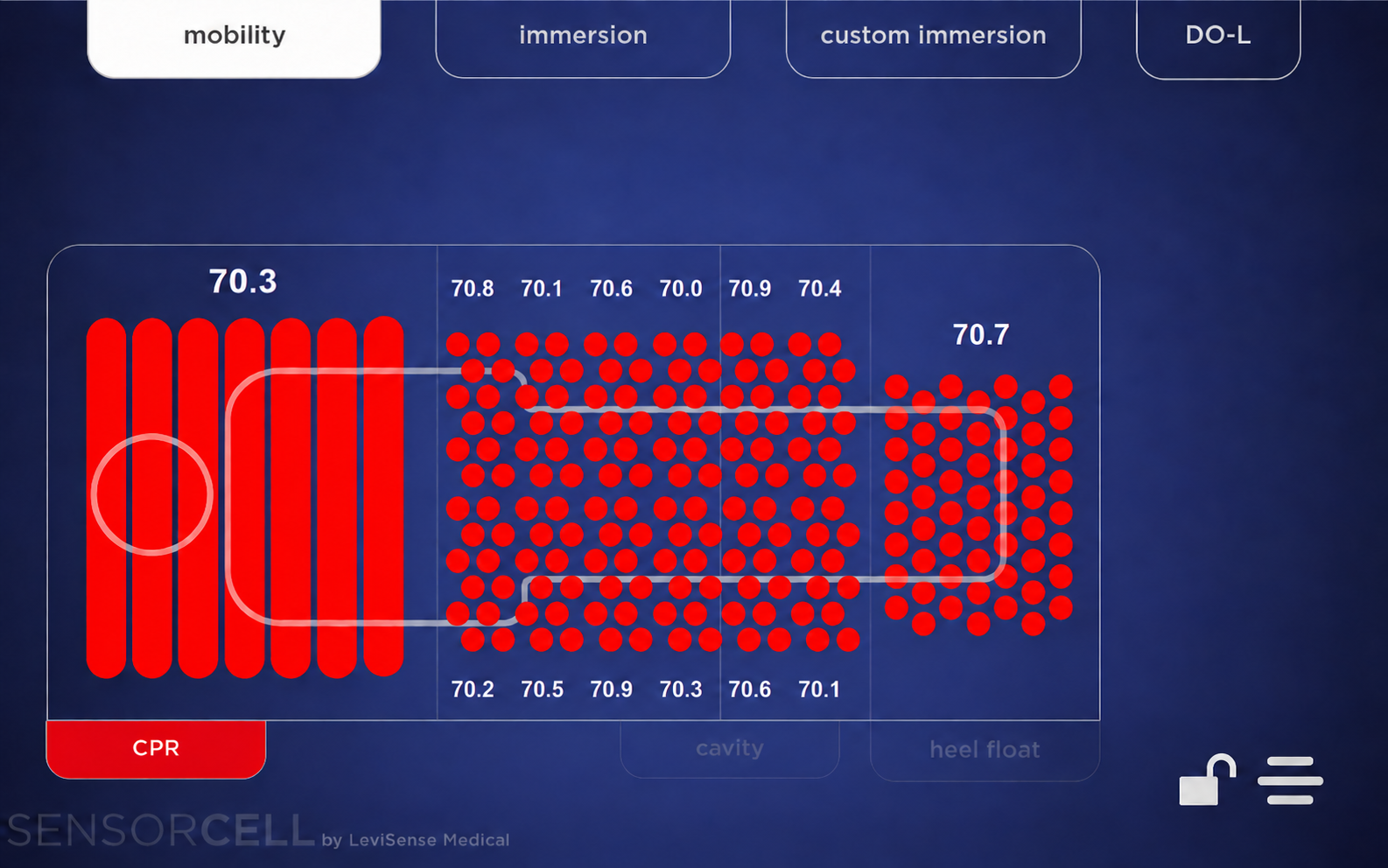
Therapy is adjustable from 12 to 50 mmHg in 2 mmHg increments. 70 mmHg is used only for Mobility (transfers) and CPR.
70 mmHgTRANSFERS AND CPR

Firm enough to facilitate transfers in and out of the bed, greatly reduce the effort required to reposition a patient, and firm enough for CPR.

12–50 mmHgREST AND HEALING

The patient can find a mattress firmness suited to their own preference for rest and healing.

≤ 5 mmHgOFF-LOADING

Depressed cells will not push back up, creating a cavity to off-load a wound, a void to cradle a painful area, or floating the feet and heels. No more boots.
< 30 secuninflated to the firm mobility setting
15 secmobility setting to comfort at 26 mmHg
~ 1 minto reposition a patient

Five modes, one touch apart

One for care and transfers, three for rest and healing, and one that keeps working while the patient sleeps.
Monitor in Mobility Mode at 70 mmHg
01Mobility Mode

Set to 70 mmHg: a firm surface for ingress, egress, transfers, linen changes and CPR. Cuts the effort of repositioning by more than 30%; afterwards the SensorCell™s cradle the patient in place without wedges or pillows.
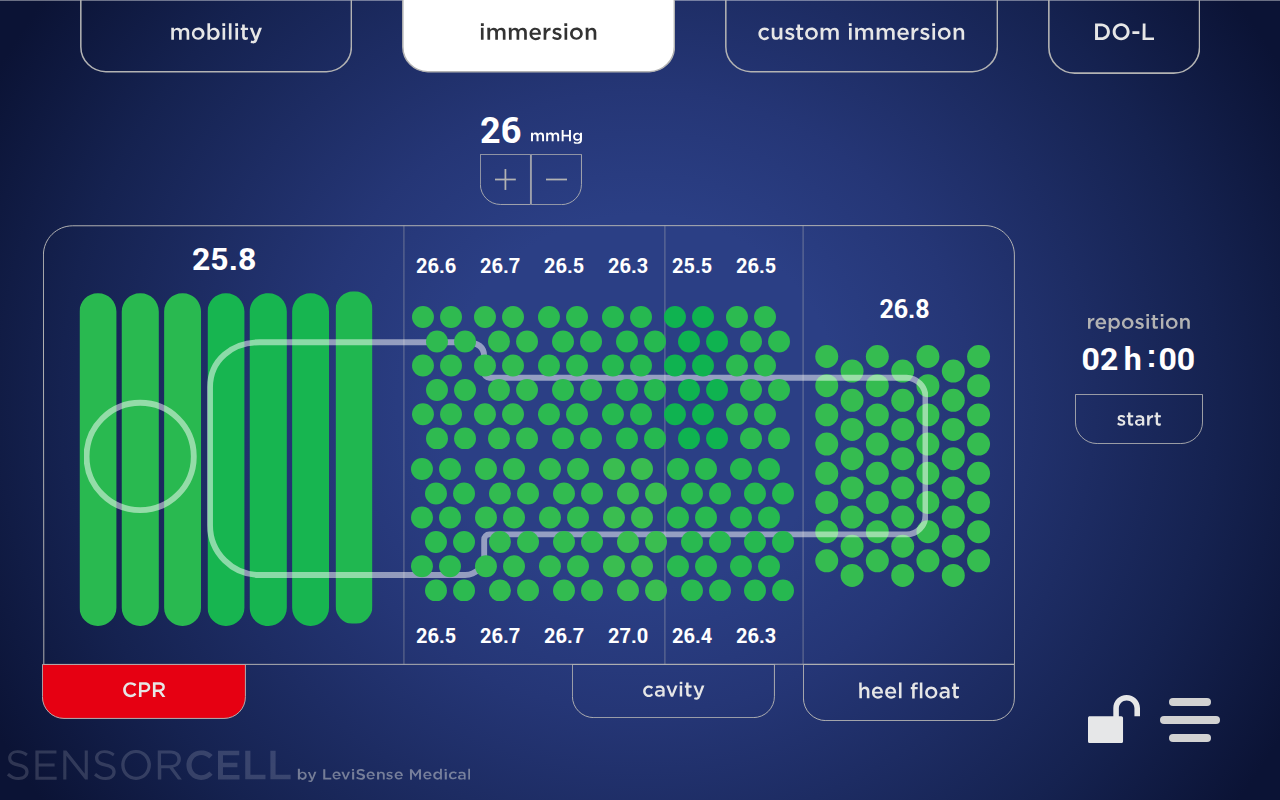
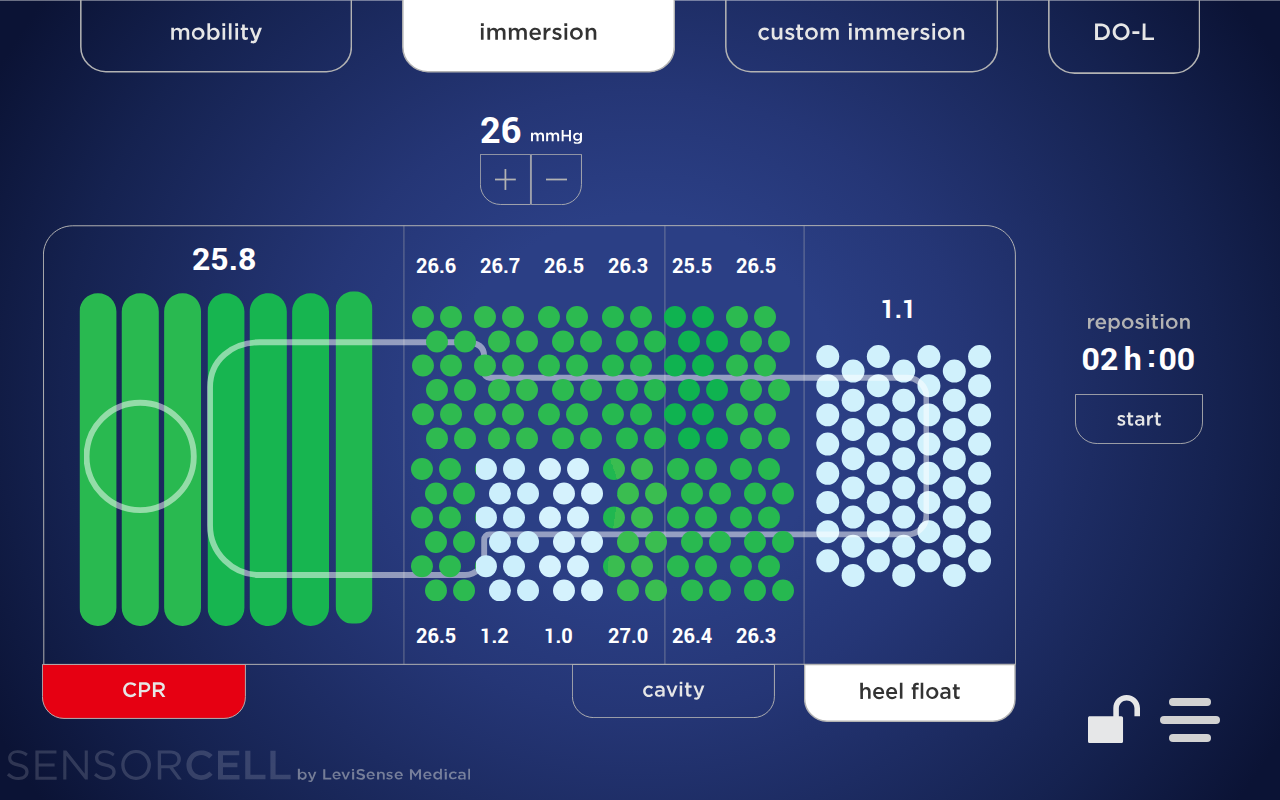
Monitor in Immersion Mode at 26 mmHg
02Immersion Mode

Preset to 26 mmHg. The pressure can be raised or lowered by 2 mmHg increments for clinical or comfort reasons.
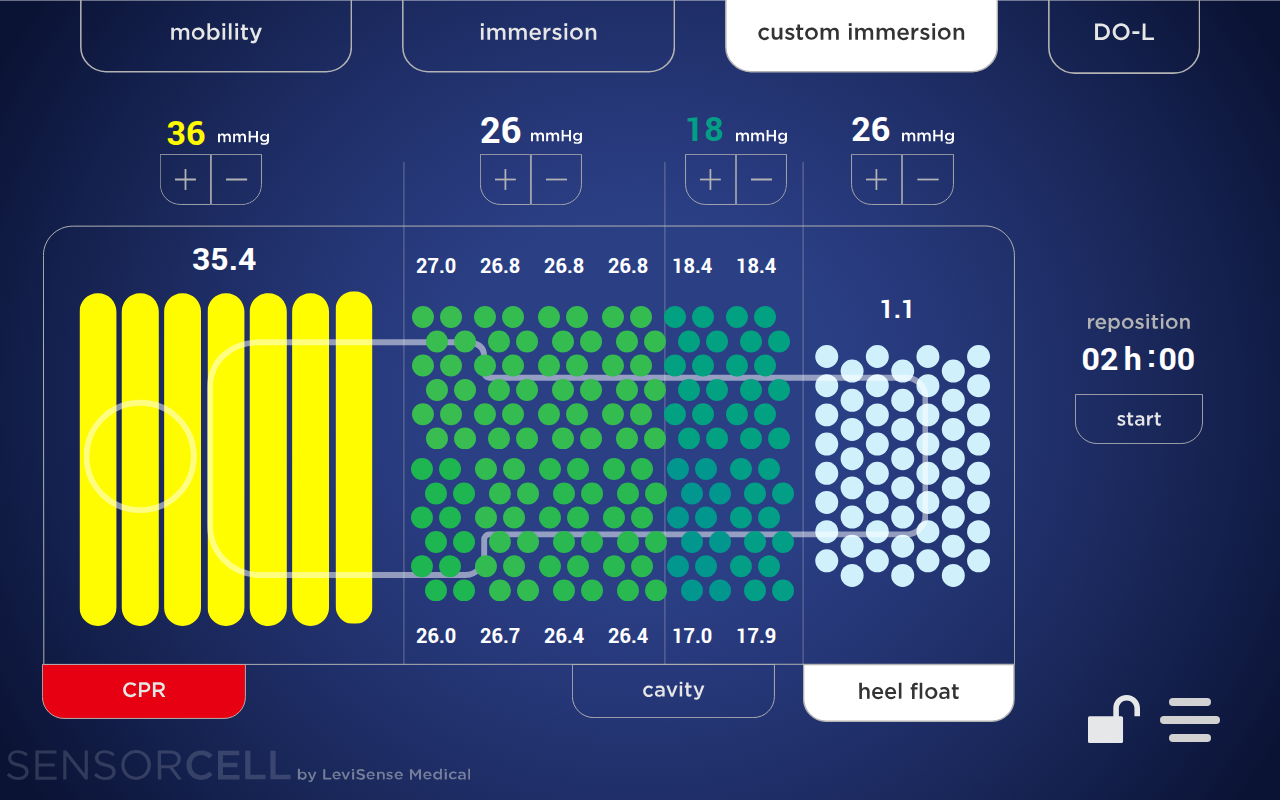
Monitor in Custom Immersion Mode with four zones set separately
03Custom Immersion Mode

Separate memorized adjustments for four independent zones.

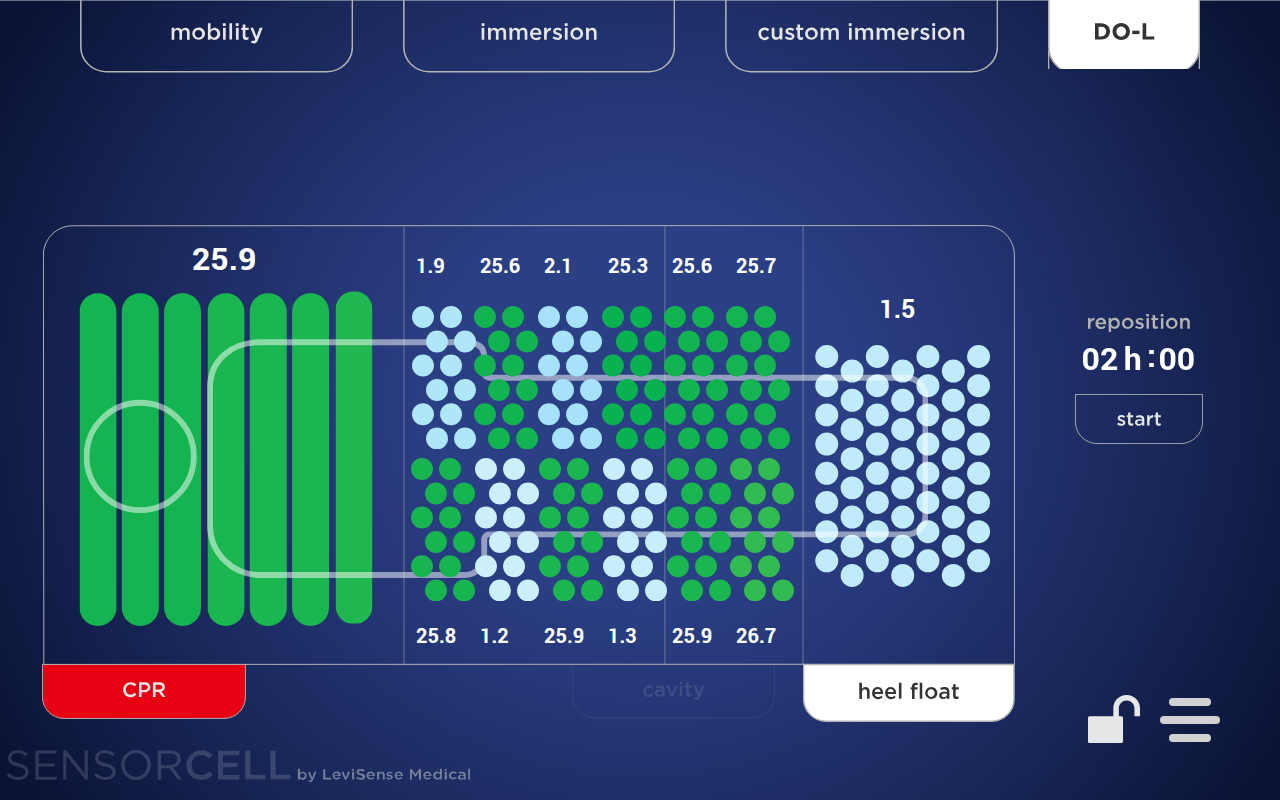
The monitor with heel float and a cavity both selected — heel zone at 1.1 mmHg and a cavity at 1.0–1.2 mmHg inside a 26 mmHg surface
04Heel Flotation / Cavity Creation

Drop a group of cells to ≤ 5 mmHg and they stop pushing back: the heels float free, or a cavity opens under an existing wound, while the rest of the surface holds its therapeutic setting.
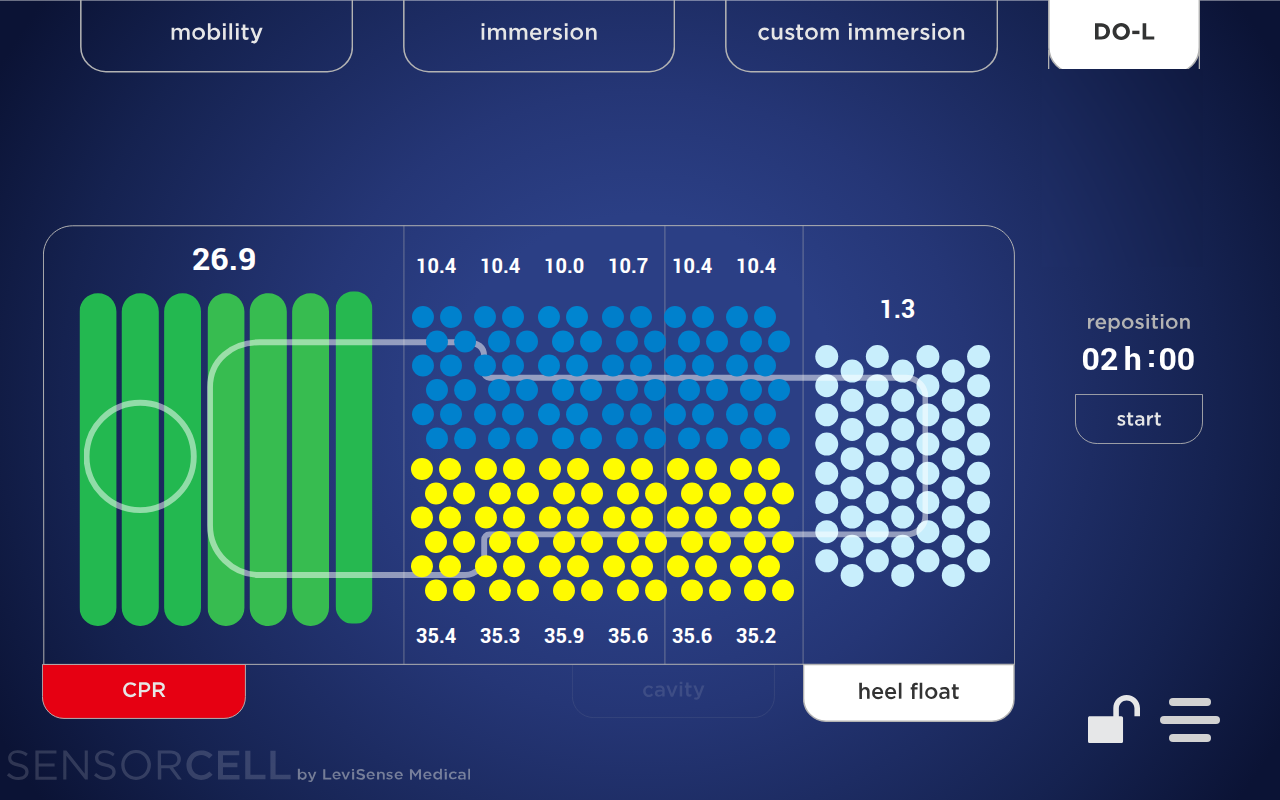
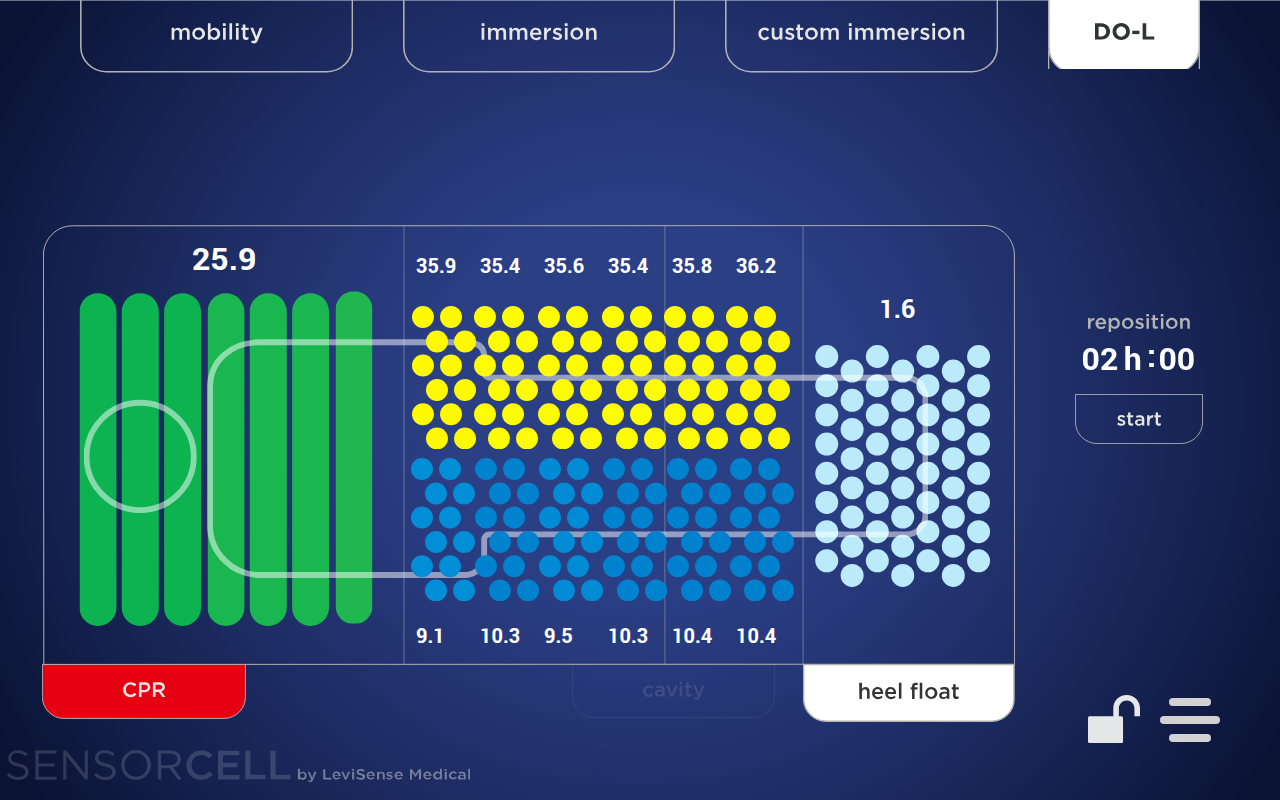
Dynamic Off-Loading — upper zones at 10 mmHg, lower zones at 35 mmHg Dynamic Off-Loading — pressure alternating cell by cell Dynamic Off-Loading — the alternating pattern shifted one column Dynamic Off-Loading — the tilt reversed, upper zones now at 35 mmHg T0 T1 T2 T3 T4 T5
05Dynamic Off-Loading™

Five programmed phases provide continuous, hands-free off-loading: a gentle tilt followed by four Support Flow™ phases that shift areas of loading and relief without disturbing restful sleep. Runs 50-minute cycles of gentle load repositioning, repeating for up to 10 hours — overnight support for caregivers at home.

SWITCHING MODES

Navigate to all five modes from the touchscreen. One touch initiates an immediate response and a rapid transition between modes.

CPR

Two alternatives for quick access from the monitor.

Enhanced Isolated Air Flow™ cover

Adjustable microclimate control. Moisture-resistant, durable, full-zipper and replaceable.
MICROCLIMATE CONTROL
Heat and humidity leave the skin through the breathable cover
CONTINUOUS AIR EXCHANGE
Adjustable isolated air flow
Enhanced Isolated Air Flow™ built into the cover circulates a gentle, adjustable flow of air that keeps skin cool and dry and protects it from the moisture that leads to maceration.
Durability
Covers are made of materials that withstand frequent use, cleaning, and disinfection and meet federal and state fire safety and infection control standards.
Construction
Full-zipper, seamless and replaceable.

How Pro-Daptive™ compares to APM and AFT

Advanced wound treatment without the limitations of Group II or Group III surfaces.

Group II alternating pressure mattresses (APM) offer limited immersion and envelopment, which reduces their effectiveness for complex wounds. Group III air fluidized therapy (AFT) beds provide immersion and envelopment but lack targeted pressure redistribution, precise off-loading and customizable control.

Both are typically preset by the manufacturer, largely by patient weight, yet weight alone does not predict an individual’s pressure redistribution needs or skin tolerance. Pro-Daptive™ lets clinicians customize therapy for each patient.

FEATUREPRO-DAPTIVE™ALTERNATING PRESSURE LOW AIR LOSSAIR FLUIDIZED THERAPY
Stages III, IV, Unstageable✓◐✓
Immersion✓◐✓
Envelopment✓◐✓
Flotation✓◐✓
Adaptive✓✕✕
Pressure Redistribution✓✓✓
Complete Off-Loading✓✕✕
Custom Cavity Creation✓✕✕
Customizable Therapy✓✕✕
Patient Comfort✓✓◐
Adjustable Microclimate Control✓✕✕
Ease of Transfer✓✓✕
Ease of Repositioning✓✓◐
Bariatric Sizes 42″ & 48″ (107 & 122 cm)✓✓✕
Home Care✓✓◐
✓Full capability◐Limited capability✕Not available

An alternative to Air Fluidized Therapy

Similar immersion, far more therapeutic options.

AFT, the Group III “sand bed”, was developed in 1968 and has long been considered the most effective surface for Stage III–IV and unstageable wounds, post-flap, post-graft and burn patients. It is also expensive to acquire and maintain, labor intensive, and associated with surface instability, patient dehydration, difficult repositioning and transfer, cleaning challenges and limited home care availability.
PRO-DAPTIVE™ OFFERS WHAT AFT DOES NOT
  • Unprecedented spot surface pressure control
  • Customizable pressure control
  • Complete off-loading
  • Cavity creation
  • Enhanced Isolated Air Flow™ for a healthy microclimate without patient dehydration
  • Surface stability
  • Easier patient transfers and repositioning
  • Easy to clean and maintain
  • Available for home care
  • Available in 42″ (107 cm) and 48″ (122 cm) widths
  • A cost-effective surface for the prevention and treatment of advanced wounds
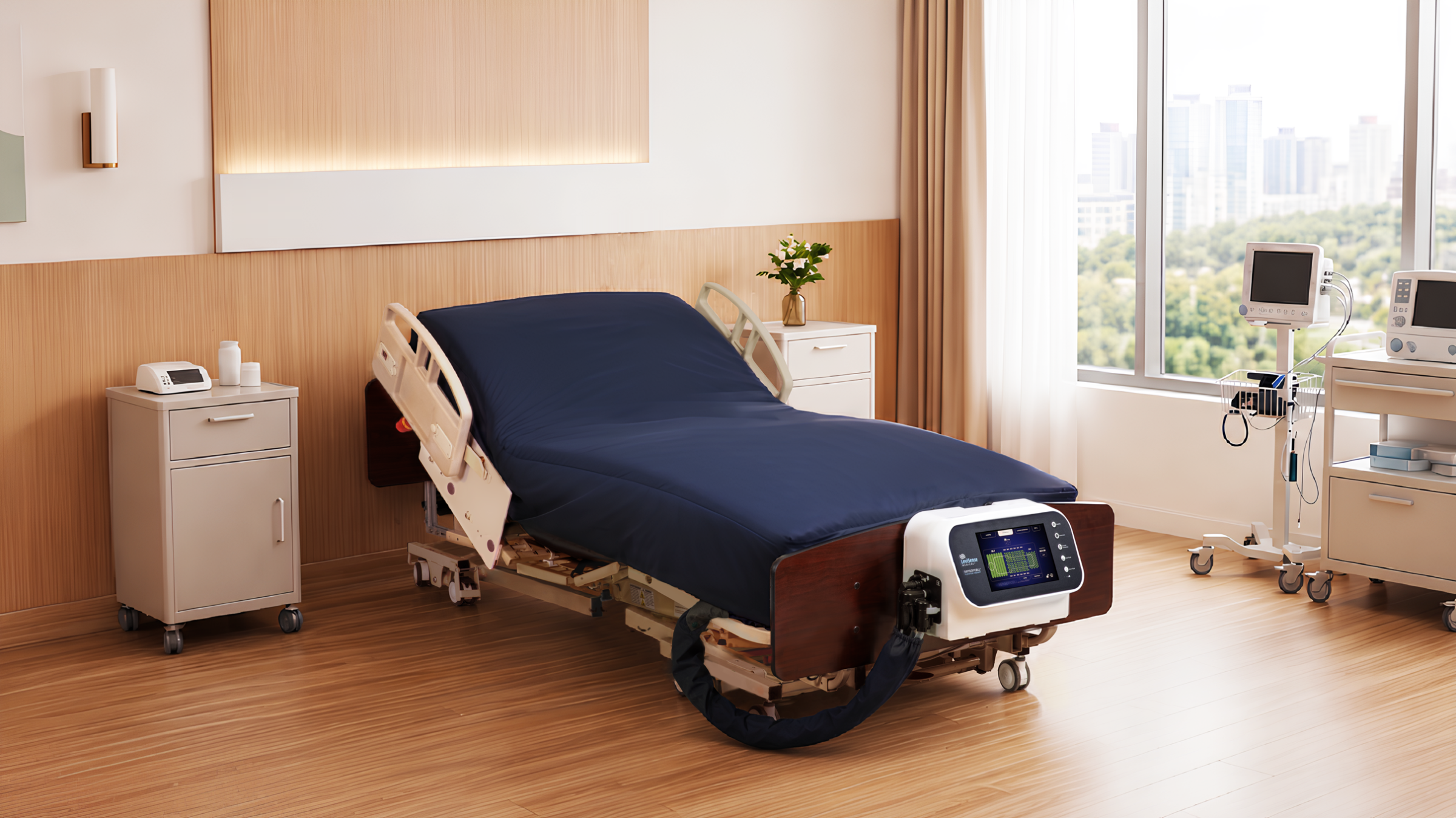
Pro-Daptive SensorCell Flotation surface installed on a hospital bed in a patient room, pump mounted at the footboard
CONTINUITY OF CARE

Bridging the gap from facility to home, and breaking the cycle of avoidable readmissions.

Pro-Daptive™ supports patients across the continuum of care, from the ICU and long-term care to the home. Rather than stepping down to a standard Group II alternating pressure surface at discharge, patients can continue the same prescribed therapy on the same platform.

The cost of an unsuccessful transition is measured in longer stays, caregiver burden, wound-care expenses and readmissions. Protecting fragile tissue through that transition helps preserve healing and reduce costly setbacks.

A versatile surface designed to meet the needs of acute care, long-term care and home care settings and frames, including bariatric.

Common questions

The three we are asked most often.

What is SensorCell™ Flotation technology?

Hundreds of independent cells, each 2.5 inches (6.4 cm) in diameter, form the pelvis, legs and foot section of the surface. Each cell reacts independently to control pressure, so the surface conforms to body contours and provides envelopment rather than holding one uniform pressure. The torso section uses high volume air cells with adjustable support.

Which patients is this surface intended for?

It is intended for the treatment and prevention of decubitus ulcers. On the treatment side, that includes high acuity patients with severe wounds such as Stage III, Stage IV and unstageable pressure injuries. On the prevention side, it is for those at high risk, such as patients who are bed-bound or have mobility limitations from spinal cord injury, MS, ALS, CP, stroke, amputation, or rehabilitation from disease or injury.

How many modes are there, and how do you change between them?

Five: Mobility, Immersion, Custom Immersion, Heel Flotation/Cavity Creation, and Dynamic Off-Loading™. One touch initiates an immediate response and a rapid transition between modes.

See all questions
Reducing the hardships of being bedridden — for patients, caregivers and providers.
The Pro-Daptive™ SensorCell™ Flotation Surface and its SensorCell™ technology are developed by LeviSense Medical, Inc. Pressure injury burden figures: LeviSense Medical, levisensemedical.com.
LeviSense Medical™, Pro-Daptive™, SensorCell™, Intelli-Daptive™, Dynamic Off-Loading™, Support Flow™ and Enhanced Isolated Air Flow™ are trademarks of LeviSense Medical, Inc.

Are you interested in this product?

For more information about the product or becoming a distributor, contact us.

Select Specifications

Air Pump

Dimensions

22 x 27 x 42 cm

Supply Voltage/Frequency

Flow Rate (Liter/Minute)

1000

Control Panel Type

Touch Screen

Mode

Mobility, Immersion, Custom Immersion, Heel Flotation/Cavity Creation, and Dynamic Off-Loading

Independently Adjustable Zones

14

Repositioning Countdown Timer

Yes

IEC 60601-1-8 Alarm System

Yes

Power Cord Type

Detachable

Air Mattress

Height

Dimensions

Number of Cells

Pelvis, Legs and Foot Section

SensorCell™

Torso Section

Air Cells

Top Cover Material

Four-Way Stretch

Enhanced Isolated Air Flow™

Yes

CPR

CPR Mode and Q-CPR Valve

Maximum Patient Weight (kg)

180 to 250
Frequently asked questions

Hundreds of independent cells, each 2.5 inches (6.4 cm) in diameter, form the pelvis, legs and foot section of the surface. Each cell reacts independently to control pressure, so the surface conforms to body contours and provides envelopment rather than holding one uniform pressure. The torso section uses high volume air cells with adjustable support.
It is intended for the treatment and prevention of decubitus ulcers. On the treatment side, that includes high acuity patients with severe wounds such as Stage III, Stage IV and unstageable pressure injuries. On the prevention side, it is for those at high risk, such as patients who are bed-bound or have mobility limitations from spinal cord injury, MS, ALS, CP, stroke, amputation, or rehabilitation from disease or injury.
Five: Mobility, Immersion, Custom Immersion, Heel Flotation/Cavity Creation, and Dynamic Off-Loading™. One touch initiates an immediate response and a rapid transition between modes. CPR access is available as an additional function.
Therapy is adjustable from 12 to 50 mmHg across 14 independently adjustable zones. Immersion Mode is preset to 26 mmHg and can be raised or lowered in 2 mmHg increments for clinical or comfort reasons. 70 mmHg is used only for Mobility Mode (transfers) and CPR.
Yes. Custom Immersion Mode provides separate memorized adjustments for four independent zones. Heel Flotation and Cavity Creation allow near-zero pressure (≤ 5 mmHg) to be selected to off-load a specific area of concern.
The surface is designed to meet the needs of acute care, long-term care and home care settings and frames, including bariatric. It is available in 80″ (203 cm) and 84″ (213 cm) lengths and is 10.5″ (26.7 cm) high, in three widths: 36″ / 91 cm (Model 9100, up to 400 lb / 181 kg), 42″ / 107 cm (Model 9142, up to 550 lb / 249 kg) and 48″ / 122 cm (Model 9148, up to 750 lb / 340 kg).
The Enhanced Isolated Air Flow™ cover delivers adjustable air flow, is moisture-resistant and breathable for microclimate control, and is made of materials that withstand frequent use, cleaning and disinfection while meeting federal and state fire safety and infection control standards. It is full-zipper, seamless and replaceable.
Five programmed phases provide continuous, hands-free off-loading: a gentle tilt followed by four Support Flow™ phases that shift areas of loading and relief without disturbing restful sleep. It runs 50-minute cycles of gentle load repositioning, repeating for up to 10 hours, and a repositioning countdown timer is shown on the monitor.
Yes. Unlike Group III air fluidized therapy, which has very limited home care availability, Pro-Daptive™ is available for home care, so patients can continue the same therapy on the same platform after discharge.
It provides similar immersion and adds customizable pressure control, complete off-loading, cavity creation, Enhanced Isolated Air Flow™ without patient dehydration, surface stability and easier transfers, and it is available for home care and in 42″ (107 cm) and 48″ (122 cm) widths.